Tuesday, November 26, 2013

Inspiring quote and afterthoughts of Memo 5.

"A poem can change a child, and a child can change the world."

-Kalli Dakos


There is a trend that I noticed when some poets like Kalli Dakos and Taylor Mali.  Why were these poets former teachers?

I looked into them a bit, got a kick at Mali's website: "(NOTE: IF YOU ARE GOING TO BE INTRODUCING TAYLOR AT AN EVENT, DON’T READ THIS ALOUD VERBATIM. IT’S TOO LONG! YOU CAN TAKE A FEW FACTS FROM HERE, OR GO TO HIS INTRODUCTION CUE CARD, WHICH YOU CAN ACCESS HERE. ALSO NOTE: “I, TAYLOR MALI, WAS BORN ON MARCH 28, 1965″)." ...oh. He knows he is good and has everything all set and ready to go. 

This made me think about Nikki Giovanni again, how famous these poets are. It brought me back to my original question, why are some teachers not including poetry in the classroom? In fact, I never heard of ANY of these people until I entered college. The only poets I knew were Poe and Shakespeare, who I still love greatly.

I figured I had to do a bit more digging. Taylor Mali has lesson plans on his site, he wants teachers to use his work. Some of these include:

Answer to an Unasked Question
All poems can be seen as answers to questions never asked. Each student artfully answers an imaginative question, leaving others to guess what the question is.
Build a Better Metaphor
Using three different colors of index cards, each student gets to create a metaphor using a concrete noun, and adjective, and an abstract noun, often with hilarious results.
Poem from a List of Prompts
A list of two-minute prompts to be given one after the other so that students can build a poem line by line.

And there they are. Just sitting there waiting for us to use and abuse in our classrooms. I want to use all these assignments in the classroom and I do see students enjoying them.  The "Build a better Metaphor" speaks for itself too in relation to teaching English in a classroom: turn the metaphors that students generate into a class-made poem and stick the cards on the wall or door. Possibilities are endless!

Dakos' site made me a little sad, "Helping children cope with grief and loss; THE GOODBYE POEMS" 
Yikes. However, maybe even some teenagers could use this kind of therapy. And it is a good way to help know students better and make the classroom more inviting.

So, while the rest of this entry may feel a bit scattered. I do want to point something out. All these poets that I encounter, they all seem geared and ready to teach a class: materials ready, plans set before you, people who are still alive and were teachers once themselves. WHY ARE WE NOT USING THIS?
I think we, as English majors, and as Teachers, need to see this. I would not have either myself if I did not have people showing me sources, and really devoting my time into really looking into these sources.
As a write myself, though slightly out of practice, I really want to have my students enjoy writing, and get used to writing. Right now, I only write for grades. Before students are faced with this reality, they need to see the more fun side to writing. The expressionism they can generate through poetry. How much they can learn through poetry. What others have to say through poetry. And how much we learn from it. I learned more about Malcolm X through Nikki Giovanni than any Social Studies or history class. How easy is it that we can connect all these tidbits of history and other literature and make it so much more meaningful to our students just through a few little poems.

And that is what this I-Search helped me see. I want to be that teacher that makes learning and writing meaningful, maybe not fun per se, but meaningful. Shakespeare is something I will always love, but what will my students learn? That Elizabethan is difficult to translate?
I am so grateful that I got a chance to explore all these different poets, and write poetry again myself.


Bonus: Dis Poem

[Memo 5] Just thinking about it, hopefully the puzzle is almost complete.


As an English major, I write a lot. Then I write some more. Then some more. Read more and then write about it. And so, the cycle continues. However, I sort of lost that artistic freedom in my writing that I got to experience in high school. Thinking back, I remember having stacks of notebooks filled with drawings and poems and songs that I was so proud of at the time. Until now, I had not realized that I do not write as much as I thought I was. No longer was I writing for me; I was writing for a grade. 

When I first began contemplating my I-Search assignment, I was at a loss. I had ideas; however, they were either too broad or not broad enough. I was only thinking about ideas that sounded good or would make for a good essay, not really putting myself into it. Like most of my ideas, one came to me last minute: poetry in classrooms. My original focus was how some teachers used poetry in the classroom and why other teachers did not include it, when I have personally seen it used effectively.
That was when I went straight for JSTOR, a very reliable, but scattered, scholarly journal website. It was difficult at first to pin point ideas applicable to my assignment. I was able to pull out some, one of which I was not even entirely sure if it would fit my assignment. My initial instinct was to look for articles that stood out to me, “English Language Arts, Basketball, and Poetry Collide”. Yes, that would work. I wanted to find ways that teachers used poetry in their classrooms, so I suspected that this teacher had found a way to link poetry to something his students liked, basketball, and then used that in his classroom.

What I got was something a little bit different. He instead found similarities between coaching basketball and teaching poetry that would change how he taught both. Well, it was not exactly what I wanted or expected, but it was an interesting article nonetheless.
However, that was when my mindset on this whole project began to change. Instead of searching for why teachers did not use poetry, I began to see a shift: how was I going to use poetry in my classroom? In all honesty, I never actually thought about it. I looked back at the article before heading towards my other steps, how basketball changed Douglas Baker’s attitude about teaching. Even my second article, it was giving me ideas and I never realized it. What I was really searching for was not how or why teachers teach poetry, but about how and why I should

It was around Memo three when I really began seeing this shift. During memo 2, I did not think it would be enough for me to just compose a couple of poems. I could do that whenever. In fact, I felt I was cheating myself and others if I did that, so I desperately searched for something much more prevalent to talk about in my blog. I look back, and I wish I wrote more. As I said, I do not really write for me anymore. If I cannot even write for myself, how am I supposed to expect my students to? How will I be able to teach them? 

(I know that bookshelf! This was from the poetry meeting I attended!)
 
That is when I decided to see Gary Whitehead’s poetry reading. I will be brutally honest, the only poetry reading I went to before this, I was reading and listening to Poe works; I stuttered over every line. So, this was a nice chance to hear a poet reading his own work. And I was so glad I went! I really saw what it were like to be both a poet and a teacher at the same time, and what that could be like. Not to sound too cheesy, I was inspired. I wanted to be that clear, that precise, I wanted to live in the mountains for a year with no electricity and just write. It was high school all over again, I just wanted to write! And that is when it hit me. My I-Search was not about other teachers, it was about what I could do as a teacher. And so that is where the rest of my searching went.
I looked up other poets, see what inspired them; find political or literature related topics in their words and poems.

I still needed to find a why though, why was this so important? “As an English major, I write a lot. Then I write some more. Then some more. Read more and then write about it.” All teachers do is ask their students to write. And write some more. Then read and write about what they read. It. Gets. OLD. Even for teachers, we do not want to spend hours of our Christmas break grading essays! Poetry, thought I am making it sound like just an easy route, is a great way for students to write vigorously, but they feel accomplishment finishing their work. Why else would Nikki Giovanni inspire SO many people, such as Kanye West's song "Hey Mama". The whole song is about how wonderful his mother is, and it includes this lyric:

"Maya Angelou, Nikki Giovanni,
Turn one page and there's my mommy."  (Jessica). 

I still want to look a little further on my own, about other poets and such, but I think I am certainly on the right route. I certainly found what it was I was searching for through this whole process. In fact, I am glad I did not choose my other topics, this was more rewarding.

Tuesday, November 19, 2013

Nikki Giovanni (Memo 4)


I wanted to explore some poets again, more in depth than I did previously. So, I decided to look into one of my favorite poets Nikki Giovanni. Originally, I wanted to find an article written by her about poetry. After some consideration, I put this idea aside and pulled up YouTube. YouTube is where I had found Nikki Giovanni about three years ago. I typed her name in the search bar and found a video titled "Shocking Interview with Nikki Giovanni". It was a long video, but it caught my interest. This was a way to do three things for me: one, to get to know a little more about her, since she is a writer I admire. Two, I wanted to compile data for my I-Search. And three, and to serve as a demonstration; sometimes, learning about a poet or an author can help establish reasons for how and why they write what they do.
As I watched and listened to the interview, I jotted down some quotes, and topics she talks about, that I think say a lot about her as a poet and a writer.

(I have to link the video since Blogger keeps sending error messages: click here).
  • "I don't know where I come from"
  • What do you do?
    • "I write." Mostly poetry.
    • "My poems...some of them have become songs." --> She's very influential for people.
  • First (black) woman to produce at Lincoln Center.
  • Toni Morrison visited Virgina Tech. (She got to meet Toni Morrison, another very influential black woman writer).
  • "No Spring Chicken" (I love that phrase).
  •  "why wait until someone dies before we say 'i love you'"
  • what could we have done? (reminds me of her poem "All Eyez on U")
  • Is friends with Queen Latifah
  • Why didn't that get learned? (Speaking to women)
    • "Why don't you have good sense?"
  • "I just do my job"
    • in her 20's-"You do what comes"
    • convinced Vogue to send her on a trip to Rome!
    • a very convincing writer
    • "always looking for opportunities" (VERY good message for teens)
    • accepts jobs she is not sure she can do
    • "never confuse art with buisness"
  • Not in favor of subsidizing farms
    • Capitalism: "A good system if we had it!"
  • Local vs. Organic foods (prefers Local)
  • claims we are "eating oil" because of how we get most food
  • "Can NEVER go wrong with volunteering"
  • Has traveled around the world
  • Interviewer called Romney a "Cooperate Entity": "And Barack isn't?"
  • She shows a high political awareness--> This is seen A LOT in her poems. Her poems that discuss politics would work as a great transition into some heavy texts that talk about politically sensitive material or themes. They could also help students get a better grasp at poetry and politics and use their new knowledge in writing persuasive essays.
  • Morman: "SOOOOOOOOOOOOOoooo Un-American" (sarcasm?)
  • Topic of a new Prison being built:
    • not a fan of "Warehousing people"
    • Prisons are a "lack of imagination and commitment"
    • "we don't need to put you in prison...we know it doesn't work!"
    • "crimes are emotional"
    • In the south, "It's always the black guy".
  • "Men don't fight about abortion"
    • Since this is a more feminist topic, you could find poems that are linked to feminism and explore more feminist texts. Perhaps build an understanding of what that is and teach students how to write and read in a feminist perspective.
    • "my 16-year-old girl has to go on welfare"
  • "Jesus is a poet"
    • "None of them (people in the Bible I'm assuming) are woman so they need to butt the Hell out!"
  • Topic of education:
    • some people rather learn about religion then send their kids to school
  • "I'm NOT a Republican"-"I hate Republicans"
  • Science vs Religion (Global Warming Topic)
    • "It will not hurt the Earth to be inhabitable"
    • "We're just upset because it's us!"
  • "Questions are brief, it's always me that goes on..."
  • Black or African American: "[bluntly] Black."
  • A time where she could not write:
    • "I wouldn't know because I don't always write...a burden to write everyday" (Kind of contradicts what we tell students in school!)
    • She cannot go a day without reading.
    • "Even people you love you don't want to talk to everyday"
  • Favorite Color: Blue
  • Happy Place:
    • Home
    • Her dog goes to the spa
  • Words of wisdom for a "young black feminist"
    • "womanist"
    • "help comes from all sides"
    • "you work with people to get things done"
    • "get people to agree"
  • Old saying she likes: "If you have them by the balls, their heats and minds will follow" -I am committed
  • She has a tattoo that says "Thug Life" on her arm. 
I have to say, there was not a lot here about poetry or writing, but I did learn a lot about Nikki Giovanni. She's witty and relatable, and would make for a wonderful research project for students (and myself). Poems where she talk about any of the topics she mentioned in this interview, there is SO much you can work with that: acting as transitions to other major works, authors, etc. or help students find relatable topics so they can compose their own writing, the possibilities are endless! I am so glad I found this interview. Please, if you have the chance, put an hour aside and just listen, she is so funny and inspirational.

Thursday, November 14, 2013

(Photoblitz) We interupt this program...

Ready Set GO!


"Is that a Photograph?"

Gamer's Hands

One of these things is not like the other.


I'm a little blue.


We feel a bit... "off". 

Finish!
This little photo session went a lot faster then I intended. I ended up taking a LOT of pictures... most of them with mirrors. Oddly enough, only one of the mirror pictures ended up in the final five.
These pictures were taken in my dorm because my roommate and I have a lot of unique stuff and the small area assured me that I had plenty of angles to work with. It was pretty fun, especially with my roommate giving me ideas. Personally, I love my "blue" photo because I got to take a whole bunch of stuff from the room and dump it on the floor.
There were a few instances where I wanted to use my bamboo plant (named "Hector") in my photos, especially for the surreal one, since I have taken a similar photo about two years ago for fun. In fact, it is one of my favorite photos I have ever taken:
I am no photography major nor have I the equipment to take good photos. In fact, I would not have been able to do this assignment if my roommate did not allow me the use of her iPod. However, I found this assignment pleasant and a nice break from other assignments I have done. Never have I been given an opportunity to do a project like this.
Actually, I think this would do well in my iSearch; maybe, I can compose a poem for one...


Blue
Scattered and Littered
Across the floor they do lay
Old and New memories

Something like this would be entertaining for students to do as well, write a short essay or a poem (or more) about the photos and see what happens. Eagerly, I wait to see what others have composed!

Monday, November 11, 2013

Ideas for Classroom Poetry Composition (Memo 3a)


While searching through our classroom texts, I kept a couple things in mind. One, what are some benefits to teaching poetry in a classroom and two, what are some approaches one could take. I also wanted to see if any chapters included anything specific about poetry.
While looking through Language Learners in the English Classroom, by Douglas Fisher, Carol Rothenberg, and Nancy Frey, I came across the chapter about Vocabulary.  In this chapter, it states that “Vocabulary knowledge is one of the best indicators of verbal ability”. It also states that “Disadvantaged students are likely to have substantially smaller vocabularies than their more advantaged classmates” and a “Lack of vocabulary can be a crucial factor underlying the school failure of disadvantaged students.”  The text proposes a number of possible solutions to helping students with this problem. One of these solutions is teacher read-alouds, “From a student perspective, the read-aloud is a helpful way to learn content and vocabulary”.
I have had my teachers read in class. Let me tell you personally, reading a large text, or a Shakespearian text (as much as I LOVE Shakespeare) can be very boring; sleep inducing even. However, the reason these may not have been as successful as the text claims it could be was because it was long and difficult to comprehend. Also, if anyone has actually seen a high school class, most of the students are not following along anyway; they may be texting under their desk, spacing off, etc.
The text does give a number of ways to avoid this problem:
1.       Select books that are appropriate to students’ interests and match their developmental, emotional, and social levels.
2.       Preview and practice the selection.
3.       Establish a clear purpose for the read aloud.
4.       Model fluent oral reading while reading the text.
5.       Be animated and use expression.
6.       Stop periodically and thoughtfully question the students to focus them on specific parts of the text.
7.       Make connections to independent reading and writing.
One of the examples of a good read aloud option was a poem, Lewis Carol’s “Jabberwocky”. Because the poem has a fairly complex and nonsense driven vocabulary, the poem is fairly difficult to comprehend and, if just merely read aloud or if students were asked to read it on their own, they probably would forget most of it because it was difficult to understand. However, by the teacher sharing her thinking with the students, not only does she provide her own interpretation, she is demonstrating her thinking and pointing out some context clues for the students. After that, they learn to model her behavior and create some interpretations of their own.
I think poems are great tools for read-alouds like this. They are fairly short and most have some very rich language. Not to mention there are so many kinds of poems varying in theme and reader interests. As I mentioned at the start of this I-Search, it is probably the easiest to find poems from a specific point in time and using those to relate to a specific text.
After reading this chapter briefly, I also believe that poems, because of their language usage, are great tools for teaching vocabulary. Not only are students exposed to vocabulary by listening, but also through composition. They can read a number of similar poems and, after hearing them read aloud or reading them aloud themselves, can compose a “found poem”. We experimented with found poems in class recently; essentially, a found poem is creating your own poem using the vocabulary in a poem you read. These words have to be ones that stuck out to you or that you did not understand. Students can create found poems and, if there is vocabulary they do not know, it is a good opportunity for teachers to establish context clue seeking and maybe introduce the Oxford English Dictionary to students. From there, the students can take their found knowledge and compose a poem. Or, they can even create a poem about their confusion and, in turn, discover the meaning in another way. 


I was having a difficult time trying to find some useful data in Kelly Gallagher’s Write Like This for my I-Search, and almost put the book aside until I came across a BRILLIANT writing idea for students. In chapter 2, Gallagher provides a helpful writing prompt to help students express and reflect.
One way to spark expressive and reflective writing in your classroom is by having each student bring in a treasured family photograph to class. Last time I did this with  my class, I cheated a bit by bringing in two photographs—one of each of my grandmothers…When I study the two photos, I like to consider what I have taken from each of my grandmothers…(1)Don’t sweat the small stuff and (2) It’s all small stuff.
From there, he was able to bring up a few writing ideas and asks students to write what is important to them, either based on the photo or who the person in the photo may have taught them.
I think it would be a great pre-writing assignment to compose a poem doing the same thing that Gallagher was asking students to do. Later, perhaps after some discussion about expression and reflection, students can work on larger assignments (i.e.: paragraphs and essay format reflections). 

I think that these different methods of composition are also good ideas for teaching reading and writing in general, which is our overall goal as English teachers. It is beneficial to have a number of ideas up and ready when teaching students how to write and to prepare them for larger assignments that they may not feel ready for. This is one of the reasons I am loving the teaching of poetry more and more. Because poetry can break the mold, it can really give students a chance to see how language works, including word play, vocabulary usage, pronunciation, and so on. They can take what they learn and apply it to their own writing and composition, and carry that on to essays and SATs and general writing. These two methods in particular are great gateways into larger writing and can carry what they learn into other classrooms!

Photos taken by me.

Thursday, November 7, 2013

Listening to Gary Whitehead (Memo 3b)


I typed this up while attending the event and recorded some of the poems so I could listen again. Please enjoy reading about my experience and maybe, hopefully, this will provide some motivation for others to attend poetry readings like this.

Gary Whitehead
Before the event:
The room had more adults than students, as I expected. It’s a shame that not many really want to listen to poetry, when they listen to it all the time. I see people on campus with headphones jammed in their ears and people sitting on the library stairs strumming guitar strings. The only people I saw my age were people whom I knew were English majors. In fact, I have had to meet each of them at least once.
I wonder… Most English teachers I had in high school were fairly young, the oldest being around early forties. Could it be, that poetry and teaching poetry feels age restricted? Does poetry have some sort of stigma that gives people the impression that it is too refined for them, too old for them to teach? Is poetry too old now?
But I am here, in the room ready to listen to a modern poet. So, I do not think that poetry is too old. So what is it about poetry that deters younger audiences, those listening and those teaching the subject? 

3 minutes before the event starts:
The room is pretty full now: REALLY full. I may have to move my coffee off the seat next to me. This is actually kind of nice. But speaking of coffee… it’s not all that good. : ( 

7:35pm
Introductions.
Shoreline submissions: Now until February 1, 2014… Maybe I could search through an older edition.
Whitehead claims that the last poetry reading he did was 5 years ago. 

First Poem:
"Sisyphus" Push a stone uphill. His dad was a high school teacher for 28 years!
Some lines that stood out to me:
“Boulder like a briefcase on a kitchen floor.”
“Life of work.”
“Falling and gathering up.”
“Even this…”

“Withering and Giving in.”
                “Drop and let go.”
“One Day in July” Wrote while in isolation.
                “Die here for all that moves me.”
                “Adam still ribbed.”
                “Another seven days of silence.”
                “No wonder God created Eve.”
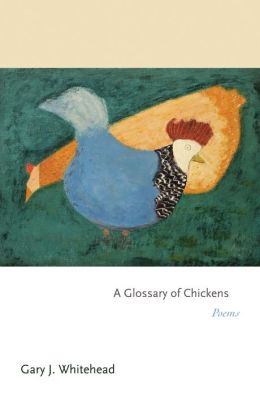
“Glossary of Chickens”  A friend of his and he were raising chickens and he gave him a literal glossary of chicken and poultry terms.
                “Gleaning, gizzard, grit”
                “Bobbling”
                “Wriggling like an old woman swallowing a pill”
                “By naming we can understand”
Working as a high school teacher: he gains a lot of inspiration from his work and his students. Wrote a sonnet on the board about an owl pellet (Sonnet); they were cheering him on. As he sat down to polish the poem he claims that it “Went on its own digestion”. I thought this was a nice little pun.
“Owl Pellet I Show My Students”
                “Gift on a park road”
                “Nocturnal Pleasure”
                “My tender moles”
“Fisherman at Sea”
                “Same question asked another way”
                “I have been at sea as well”
“Sealegged”
“Vessel is dragged back onto land”
“Of fools there are many”

Some Q/A:
·         One woman noted that he puts animals in a lot of his poems and asked if it was intentional.
o   He responded that he did not intend it, he was just fascinated by the world around him: an animal lover. Otherwise, it was not something he noticed before.
·         Was there a way or method to how he arranged the poems in his book?
o   No, they are miscellaneously written and then put together. Sometimes he spreads them out on the floor or table and look for poems that seem to have some sort of pattern and prays for luck. Glossary of Chickens was assembled rather quickly due to a time constraint and because he “didn’t want to wait too long and have them to forget about me”.
·         Has he ever written a poem that turned into a story?
o   Whitehead claims that he has turned stories into poems but never the other way around. He prefers poems because they are shorter. However, he does have some essays and about ten short stories.

·         He has written a blog while he was writing poetry in Oregon. Many of the poems are still up: “Fronting the Essentials” (http://garyjwhitehead.blogspot.com/). “Destination: a remote cabin in the backwoods of southwestern Oregon, deep in the mountains and not far from the famous Rogue River. My lodgings there would be meager though not quite as primitive as Henry David Thoreau's at Walden.”

·         Experience with teaching writing in a classroom?

o   Creative writing was only one course. “Kids would get turned on into writing then that was it.” He has to propose other classes to the school board until they offered a 4 year creative writing course. He runs his high school and college writing workshops the same way. Always gives a lot of writing prompts then allows them free reign. “They rise to the challenge; and I enjoy it”. However, this was an affluent district. Would it be the same experience if it were an urban school maybe?

·         Do the students come back and tell him about their new experiences?

o   Yes, yes they do. He sometimes friends his graduates on Facebook, afterwards, to keep in touch.

·         What is his favorite poem?

o   “Tough one”, he says. “Sleeping with my dog” poem is probably his favorite because “I am obsessed with my dog”.

Recommends Poet’s Market to advertise his poems “before the realm of the internet” (http://www.writersdigestshop.com/poets-market).

When I asked him about teaching poetry in classrooms and his own experiences, he mentioned that most of the poetry he taught was during his creative writing classes. As one of my hypotheses confirmed, some of his more advanced classes lack an opportunity to teach poetry in the class, as they do not fit into the curriculum.
So, I asked what he feel could allow him to teach poetry anyway, as a way to reinforce the topic at hand while still being within the curriculum. He said that a good approach would be to find a poem that was maybe inspired by the text and use that as an introduction to the text or a way to reinforce a theme.
He also teaches a poetry class online where students from AROUND THE WORLD can take the course.
Overall, this was a wonderful experience and I was very glad to listen and meet Gary Whitehead. Please check out his blog (linked above) and check out some of his works.